Less Tracking, Fewer Requests: Removing Fathom Analytics
For a while now, I used Fathom Analytics [^ Fathom Analytics: https://usefathom.com/] to collect and track analytics on this blog. The idea being that I can see how well it's doing and get a general idea of how many people look at what I occasionally share on here. I chose Fathom because of its simple and functional design, and its stellar privacy mission, I have no interest in tracking readers or collecting personally identifiable information.
“Analytics can’t replace Judgment! Let judgement, personal involvement, learning, gut instinct, and inspiration be your guides, not simply numbers.” ― Ted Rubin
Once I set everything up, I just let it be and kept paying the monthly subscription cost ($15) for the hosted service. Don't we all just love it when something works smoothly and requires no attention? I certainly do. That being said, just because a service works nicely, doesn't mean it's useful or necessary. Last week, during a random moment of overthinking several technical matters, a realization dawned on me, and it led to the –somewhat drastic– changes described in this blog post.
To my dismay, I realized I haven't checked my analytics dashboards or data, not even once in the past 12 months or so. Folks, I have been paying for a service that made no difference whatsoever on how much I wrote or shared. I do admire Fathom's mission, and I do see the value of collecting some analytics, but the simple truth is that it's not something I need nor use at the moment. And so, Fathom Analytics (and associated code) had to go, cue the sad music.
Deciding to remove Fathom Analytics took some consideration, actually removing it took a couple of quick steps. Still, before pulling the plug, I wanted to take one last look at the data it had been collecting in the background, more out of curiosity than necessity.
What Does The Data Say?
Before I cancelled my Fathom Analytics subscription, I took a look around the various dashboards and data views provided by the platform to have one last analysis of what the collected data says about traffic hitting my blog. I first added web analytics back on July 6, 2021, and it has been accumulating data ever since.
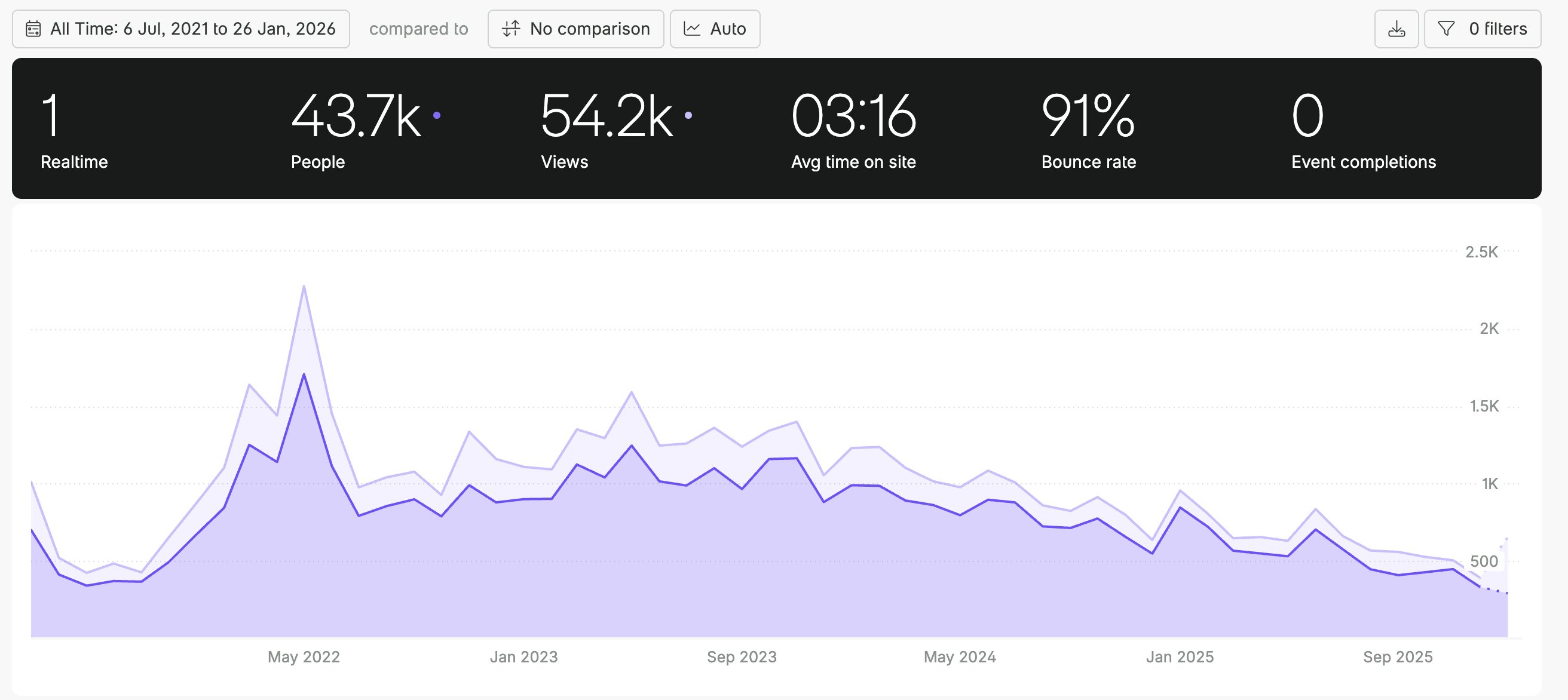
Below is the main dashboard showing a total number of 54.2k views overall (not bad, eh!) and a bounce rate of 91% (which I don’t fully understand and apparently felt no urgency to learn more about, but it sounds like something a marketing person would sweat over). Looking at the chart below made me wonder what happened in May 2022 that led to such a spike.
A brief look into the data revealed that two posts[^ Permanent Residency In Sweden: https://ahmedmusaad.com/permanent-residence-in-sweden/][^ Add Google Authentication to any Website using Nginx and Oauth Proxy: https://ahmedmusaad.com/add-google-authentication-to-any-website-using-nginx-and-oauth-proxy/] I shared that month account for most traffic, and given the content of these posts, it actually makes sense. Interestingly enough, one of the two posts (The one detailing how to add Google authentication to any website using Nginx[^ Add Google Authentication to any Website using Nginx and Oauth Proxy: https://ahmedmusaad.com/add-google-authentication-to-any-website-using-nginx-and-oauth-proxy/]) is also my most viewed post (9.8k views).
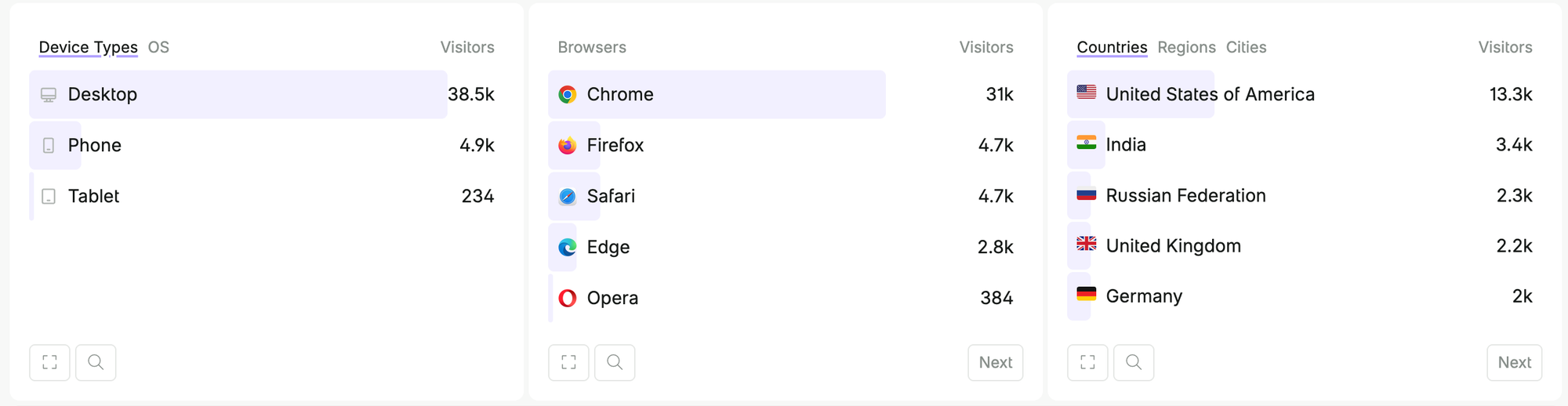
Next, we get a nice breakdown of page views grouped by device types, browsers, operating systems, and origin countries. It shows a somewhat varied distribution among various choices, and certainly tracks with general trends on what software or devices people tend to use. No big surprises here, well, apart from the seven people who visited the blog using Internet Explorer, to whom I would like to pose a question: why, seriously, why?
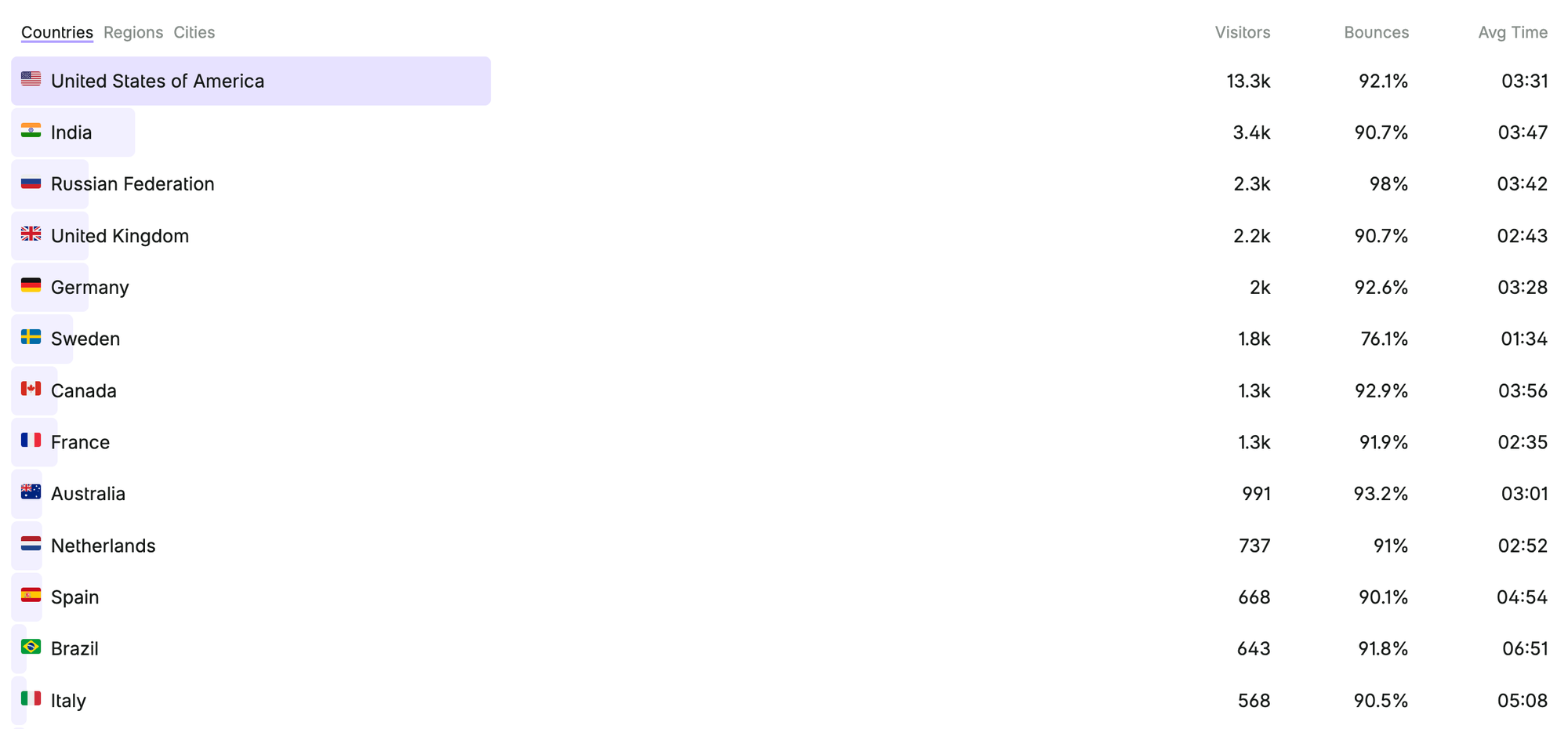
Finally, I examined the expanded list of origin countries to get a broader idea of where you might be reading this blog from and to nobody's shock, almost all the top countries are from with the European Union. I can honestly say I didn't expect India to be anywhere on this list, and I have no clue why so many people from Russia are checking out my blog. Brazil, Australia, and Canada were also unexpected but nonetheless welcome. In fact, everyone is welcome, location be damned.
Decommissioning Fathom Analytics
Removing Fathom Analytics from this website involves a couple of quick, and relatively simple steps, namely:
- Export all historical data from my Fathom Analytics account for safekeeping and future analysis.
- Cancelling my Fathom Analytics subscription and deleting my account.
- Removing the code snippet used to integrate analytics collection into this blog.
- Updating the privacy policy page to reflect the changes made and highlight that this blog is now 100% analytics-free.
Exporting all data from a Fathom Analytics account is well documented[^ Export your data: https://usefathom.com/docs/features/exporting] and takes a couple of minutes before an email notification informs you that your export is ready for download. Cancelling the subscription[^ Cancel your subscription: https://usefathom.com/docs/account/close] and deleting the account are equally simple and take a couple of clicks before it is all gone like it never existed before.
Removing the integration between Fathom Analytics and my blog is even simpler. All I had to do was to remove the following code block from the code injection settings on my blog, and hooray, all done. So long, Fathom, and thanks for all data 👋🏾.
<!-- Fathom - beautiful, simple website analytics -->
<script src="https://cdn.usefathom.com/script.js" data-site="XXXXX" defer></script>
<!-- / Fathom -->
Finally, I updated the Privacy Policy page, replacing the text under the Web Analytics section with a simple line that informs readers of the new state of things. This blog is finally 100% free from any web analytics collection or tracking, privacy-focused or otherwise. With everything being complete, let me share some final thoughts on the matter at hand.
Final Thoughts ...
Nowadays, we are all obsessed with views, be it who saw our Instagram stories, who liked our Facebook posts, or who is checking out our LinkedIn profiles. It's an unhealthy obsession, and can be rather harmful to our wellbeing, work, and relationships if we don't manage it properly.
In my case, removing Fathom Analytics wasn’t a reaction to such obsession or pressure. It was a simpler realization: I wasn’t using the data, and I didn’t need it to write or share anything here. The metrics existed, but they never influenced my decisions.
With Fathom Analytics gone, this blog now makes fewer requests, ships less JavaScript, and asks nothing of its readers beyond their attention. That feels like a small but meaningful improvement—technically, and otherwise.